

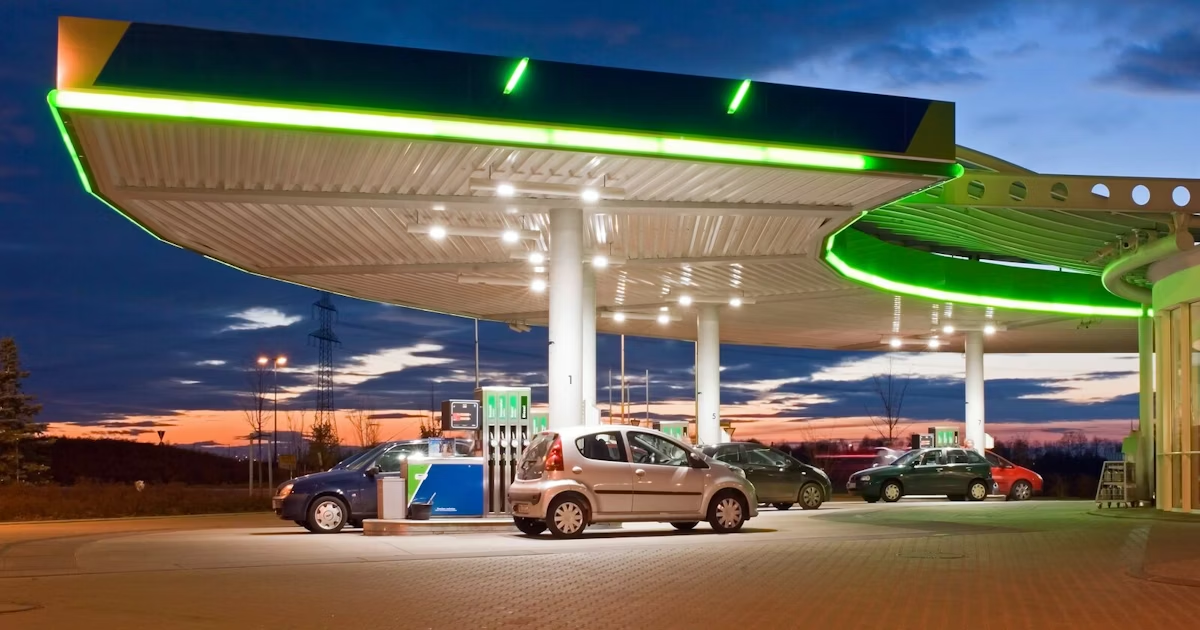
Big-box retailers and convenience chains are making bold moves into fuel retailing, transforming how Americans buy gas. Walmart, Costco, Dollar General, and other major retailers are building gas stations at record pace, bringing fresh competition to an industry once dominated by traditional oil companies and independent operators.
This shift represents more than just new pumps at familiar stores. Retailers entering fuel business are fundamentally changing the value proposition for consumers while creating new profit centers that complement their core operations.
Why Major Retailers Are Adding Fuel Stations
The business case for retailers entering fuel business has never been stronger. Several factors are driving this expansion.
First, fuel retail offers attractive margins and consistent traffic. Gas stations naturally draw customers who might otherwise drive past a retail location. Once on-site, these customers become prime candidates for in-store purchases. The strategy mirrors what Costco has perfected over decades, with fuel now accounting for roughly 12% of its total sales.
Second, operational capabilities have improved dramatically. Modern fuel management systems integrate seamlessly with existing point-of-sale infrastructure. Retailers can leverage their existing supply chain expertise and vendor relationships to compete effectively on price while maintaining healthy margins.
Third, the competitive landscape has shifted. Traditional fuel retailers face pressure from multiple directions: declining fuel volumes in mature markets, the gradual transition to electric vehicles, and changing consumer preferences. This creates opportunity for well-capitalized retailers with strong customer loyalty.
Who’s Leading the Charge
Walmart operates more than 450 fuel and convenience locations across 34 states, with plans to add more than 45 stations this year through new builds and remodels. Unlike membership-based competitors, Walmart’s stations are open to all customers, potentially broadening reach beyond traditional warehouse club demographics.
The company’s fuel strategy focuses on high-volume locations near its supercenter stores. This approach creates convenient one-stop shopping experiences while driving incremental foot traffic to the main store. Customers filling up before a grocery run represent exactly the kind of trip consolidation that modern consumers prefer.
Costco continues expanding its fuel center hours, keeping pumps open until 10 p.m. instead of the previous 6 p.m. closing time. CEO Rob Vachris indicated that most stations now stay open an hour later than before, with some opening earlier as well. The extended hours make Costco’s fuel centers more competitive with traditional 24-hour gas stations while better serving working families who shop after traditional business hours.
Dollar General has taken a different approach. Starting with a pilot location in Alabama more than a decade ago, the discount retailer has gradually expanded to more than 40 fuel locations, primarily in Southern markets. This measured expansion allows Dollar General to refine its operational model while testing consumer response in markets where its stores already have strong presence.
The partnership model Dollar General established with Mansfield Oil in 2013 demonstrates how retailers can enter fuel business without building entirely new operational capabilities from scratch. By leveraging experienced fuel distributors and operators, retailers can focus on what they do best: creating value for customers at their core business while generating incremental revenue from fuel sales.
The Competitive Advantage of Scale
Retailers entering fuel business bring several structural advantages that traditional operators struggle to match.
Volume purchasing power translates directly to competitive fuel pricing. Large retailers negotiate fuel contracts across hundreds of locations, securing rates that smaller independent operators cannot access. This purchasing advantage allows them to offer consistently competitive prices while maintaining profitability.
Customer loyalty programs create additional value. When fuel purchases earn rewards redeemable throughout the store, customers have strong incentive to consolidate their spending. Walmart shoppers can apply fuel rewards to grocery purchases, while Costco members enjoy the benefit of consistently low prices at the pump as part of their membership value proposition.
Real estate advantages matter significantly. Many retailers already own or lease premium locations with excellent traffic patterns and visibility. Adding fuel facilities to existing sites maximizes the value of these assets while spreading fixed costs across multiple revenue streams. The marginal cost of adding fuel to an existing location is considerably lower than building a standalone gas station.
Operational efficiency extends beyond fuel operations. Retailers use sophisticated inventory management systems, optimized staffing models, and data-driven decision making across their businesses. These capabilities transfer readily to fuel operations, allowing retailers to operate more efficiently than many traditional fuel retailers who may lack similar analytical capabilities.
Beyond Fuel: The Total Value Proposition
Smart retailers understand that fuel alone does not guarantee success. The most effective strategies combine competitive fuel prices with enhanced convenience offerings that drive additional profit.
Expanded food service represents a significant opportunity. Fresh food preparation, grab-and-go meals, and branded food concepts turn basic convenience stores into dining destinations. Customers waiting to refuel or those making quick stops increasingly expect quality food options, not just chips and candy.
Digital integration improves the customer experience while gathering valuable data. Mobile payment options, fuel price apps, and digital loyalty programs make transactions smoother while building customer engagement. Retailers can analyze purchasing patterns to optimize product assortment, adjust pricing dynamically, and deliver personalized offers that drive incremental sales.
Partnerships with third-party delivery platforms extend reach beyond physical locations. Retailers like BP, Shell, and 7-Eleven have partnered with services like Deliveroo, Foodpanda, and DoorDash to deliver convenience items directly to customers. Traditional retailers entering fuel business can learn from these models to create additional revenue streams.
Car wash facilities and other services add profit centers that require minimal operational complexity. Automated car washes complement fuel operations naturally, appealing to the same convenience-focused customers. The combination of fuel discounts and complementary services creates compelling reasons for customers to choose retail-operated stations over traditional alternatives.
Preparing for the Electric Future
Forward-thinking retailers recognize that fuel business success today requires planning for an electric tomorrow. While gasoline demand remains strong in most markets, the long-term trajectory points toward electrification.
Installing EV charging infrastructure positions retailers to serve changing customer needs. Early adopters capture mindshare among electric vehicle owners while building operational expertise before competition intensifies. The extended dwell time required for EV charging creates opportunities to drive in-store traffic and increase basket sizes.
The economics of EV charging differ fundamentally from traditional fuel retail. Installation costs are higher, utilization builds gradually, and the time customers spend on-site changes dramatically. However, retailers with strong convenience offerings and comfortable waiting areas are well-positioned to turn these challenges into advantages.
Some retailers are already making significant investments. Shell announced plans to increase charging points from 60,000 to 500,000 globally by 2025. While traditional fuel retailers lead this transition currently, large retail chains entering the market can leverage their real estate, capital, and customer relationships to compete effectively.
The Impact on Traditional Fuel Retailers
The expansion of retailers entering fuel business creates pressure on independent operators and traditional fuel brands. Competition intensifies, margins compress, and customer expectations rise.
Traditional operators cannot match the purchasing power of large retailers, making it difficult to compete on price alone. They must differentiate through superior service, convenient locations, or unique offerings that create value beyond pump price.
The focus must shift from fuel to nonfuel retail. As fuel margins face pressure and volumes potentially decline, traditional convenience stores need strong offerings in food service, merchandise, and ancillary services. The stores that thrive will be those that become destinations rather than just refueling stops.
Innovation becomes essential. Digital engagement, loyalty programs, and operational efficiency matter more than ever. Traditional retailers must invest in technology and capabilities that historically fell outside their core competency but now determine competitive success.
Consolidation will likely accelerate. Operators lacking scale or strong nonfuel offerings may exit the market or sell to larger players. The industry is moving toward a landscape where fewer, larger operators dominate, similar to patterns seen in grocery and general merchandise retail.
What This Means for Consumers
The entry of major retailers into fuel business generally benefits consumers through increased competition and enhanced convenience.
Fuel prices tend to be lower where large retailers operate stations. The combination of volume purchasing and strategic pricing often results in prices several cents below nearby competitors. For families and commuters purchasing hundreds of gallons annually, these savings add up significantly.
Convenience improves when fuel stations integrate with regular shopping trips. Being able to fill the tank while buying groceries or picking up essentials saves time and reduces vehicle miles traveled. This trip consolidation appeals to busy consumers looking to maximize efficiency.
Quality and consistency typically improve. Large retailers bring standardized operational procedures, regular maintenance, and strong brand reputations to fuel operations. Consumers can expect similar experiences across locations, with less variation in cleanliness, product availability, or service quality.
Loyalty program integration creates additional value. Earning rewards on fuel purchases that apply to groceries, general merchandise, or other categories effectively increases the return on everyday spending. Strategic consumers can optimize their purchasing patterns to maximize these benefits.
Key Success Factors for Retailers Entering Fuel Business
Not every retailer will succeed in fuel. The winners will be those who understand what makes fuel retail distinct from their core operations while leveraging their existing strengths.
Location selection matters immensely. High-traffic locations with excellent visibility and easy access will always outperform secondary sites. Retailers must carefully evaluate whether their existing real estate portfolio includes locations that make sense for fuel operations.
Investment in infrastructure requires significant capital. Modern fuel systems, environmental compliance, and ongoing maintenance all carry substantial costs. Retailers need sufficient scale to justify these investments and patient capital to build the business gradually.
Operational excellence cannot be overlooked. Fuel retail involves unique challenges around safety, environmental compliance, and specialized equipment. Retailers must either build internal expertise or partner with experienced operators who bring these capabilities.
Customer-centric thinking drives long-term success. The best fuel offerings integrate seamlessly with the core retail experience, creating value for customers beyond just competitive pricing. Retailers should focus on solving customer problems and enhancing convenience rather than simply adding pumps to existing locations.
The Road Ahead
Retailers entering fuel business represents a permanent shift in the competitive landscape. As more major chains add fuel operations, the industry will continue evolving toward a model where large, well-capitalized operators dominate.
Traditional distinctions between fuel retailers and general retailers will blur further. Successful operators will be those that excel at convenience retailing in all its forms, whether fuel, food, or merchandise.
The transition to electric vehicles will reshape the business again, but probably more slowly than many predict. Retailers investing in fuel infrastructure today will have years to generate returns before electrification significantly impacts most markets.
Meanwhile, the opportunity to capture market share from traditional operators remains substantial. Retailers with strong brands, loyal customers, and operational excellence can build profitable fuel businesses that complement their core operations while meeting genuine consumer needs.
The expansion of retailers entering fuel business has only just begun. As pioneers like Walmart, Costco, and Dollar General demonstrate the model’s viability, expect more retailers to follow. The gas station of the future increasingly looks like a retail store that happens to sell fuel rather than a fuel station that happens to have a convenience store attached.
Frequently Asked Questions
Why are major retailers like Walmart and Costco adding gas stations?
Large retailers are adding fuel operations to drive store traffic, generate incremental profit, and offer more convenience to customers. Fuel retail provides consistent margins while bringing customers onto properties where they’re likely to make additional purchases.
Are retail gas stations cheaper than traditional stations?
Generally yes. Retailers like Costco and Walmart typically offer prices several cents below nearby competitors due to volume purchasing advantages and strategic pricing designed to drive store traffic rather than maximize fuel margins.
Can non-members buy gas at Costco and Sam’s Club?
No, Costco and Sam’s Club fuel centers are restricted to members only. However, Walmart’s gas stations are open to all customers, not just Walmart+ subscribers, which gives Walmart broader market reach.
What services do retail fuel stations offer besides gas?
Most retail fuel stations offer car washes, convenience items, and food service. Some are expanding to include EV charging, mobile ordering integration, and enhanced food options. The specific offerings vary by retailer and location.
How are retailers preparing for electric vehicles?
Forward-thinking retailers are installing EV charging infrastructure at select locations, testing different charging models, and designing stores with extended dwell time in mind. However, most are still primarily focused on traditional fuel operations while monitoring EV adoption trends.
What does this mean for traditional gas station operators?
Traditional operators face increased competition on price and convenience. To remain competitive, they must differentiate through superior service, strong nonfuel offerings, strategic locations, or unique value propositions that large retailers cannot easily replicate.
