

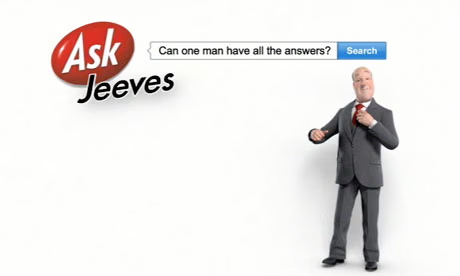
AskJeeves is one of the most well-known names from the early days of the internet. Long before Google became dominant, AskJeeves offered a different way to search online. Instead of typing short keywords, users could ask full questions, just like talking to a real person.
This simple idea made AskJeeves stand out and helped millions of people find answers easily. Even though the platform later changed its name to Ask.com, many users still remember and search for AskJeeves today.
This article explains what AskJeeves is, how it worked, why it was popular, and what happened to it over time.
What Is AskJeeves?
AskJeeves was a search engine launched in 1996. It was created to help users find answers by asking questions in natural language. The name “Jeeves” came from a fictional butler character, inspired by classic British literature, who symbolized polite and helpful service.
Unlike other search engines of that time, AskJeeves did not focus only on keywords. Instead, it encouraged users to type complete questions such as:
- “What is the tallest building in the world?”
- “How do I bake a chocolate cake?”
- “Who invented the telephone?”
This made AskJeeves very beginner-friendly, especially for people new to the internet.
The Idea Behind AskJeeves
The main goal of AskJeeves was simplicity. The creators believed that searching the web should feel natural and easy. Many people were not comfortable using advanced search terms, so AskJeeves removed that barrier.
The platform used a mix of human editors and automated systems. Common questions were answered using a curated database. For other queries, AskJeeves searched the web and showed relevant results.
This question-and-answer approach helped AskJeeves build a unique identity in the search engine market.
How AskJeeves Worked
AskJeeves worked differently from traditional search engines in its early years.
Question-Based Search System
Users typed full questions into the search box. AskJeeves then tried to match the question with existing answers in its database. If a match was found, it showed a direct answer.
Smart Search Results
If no exact answer was available, AskJeeves displayed a list of related websites. These results were organized in a way that made them easy to understand.
Categories and Topics
AskJeeves also offered topic-based browsing. Users could explore categories like health, education, business, and technology without searching.
This combination made AskJeeves both helpful and user-friendly.
Why AskJeeves Became Popular
AskJeeves gained popularity quickly because it solved a real problem. Many people did not know how to search effectively online, and AskJeeves made it simple.
Here are a few reasons why it became popular:
- Easy to use for beginners
- No need to learn special search skills
- Friendly branding with a butler character
- Clear and direct answers
At its peak, AskJeeves was among the top search engines in the world.
AskJeeves vs Other Search Engines
When AskJeeves was growing, other search engines like Yahoo, AltaVista, and later Google were also competing.
Key Differences
- AskJeeves focused on questions and answers
- Google focused on keyword relevance and page ranking
- Yahoo acted more like a directory
AskJeeves was better for simple questions, while Google became better for deep research and fast results. Over time, users preferred speed and accuracy, which helped Google take the lead.
The Change from AskJeeves to Ask.com
In 2006, AskJeeves officially rebranded as Ask.com. The company decided to drop the “Jeeves” character and focus more on a modern search experience.
Why the Name Changed
- To compete more directly with Google
- To appear more professional and less cartoon-like
- To focus on search technology instead of branding
Even after the rebrand, many users continued to search for AskJeeves out of habit.
Features Introduced After Rebranding
After becoming Ask.com, the platform added several new features.
Improved Search Algorithm
Ask.com shifted toward keyword-based search while still supporting natural language questions.
Answer Boxes
The platform continued to show direct answers at the top of search results, similar to what many search engines do today.
Vertical Search Options
Users could search specifically for images, videos, news, and maps.
These changes helped Ask.com stay relevant, even though it never regained its earlier dominance.
The Decline of AskJeeves
Despite its early success, AskJeeves slowly lost market share.
Main Reasons for Decline
- Strong competition from Google
- Slower innovation in search technology
- Reduced user trust over time
- Shift in user behavior toward faster results
In 2010, Ask.com stopped developing its own search technology and started using results from other providers.
AskJeeves’ Impact on Modern Search
Even though AskJeeves is no longer a major search engine, its influence is still visible.
Natural Language Search
Many modern search engines now understand full questions, just like AskJeeves did years ago.
Voice Search Assistants
Voice assistants such as Siri, Alexa, and Google Assistant rely heavily on question-based search, a concept AskJeeves popularized.
Featured Snippets
Direct answers shown at the top of search results are similar to AskJeeves’ original approach.
AskJeeves helped shape how people interact with search engines today.
Is AskJeeves Still Available?
The original AskJeeves website no longer exists in its old form. However, Ask.com is still active and provides search results, news, and answers.
Many people still search for “AskJeeves” because of nostalgia or familiarity. Search engines recognize this and redirect users to Ask.com or related content.
AskJeeves and SEO Value Today
From an SEO point of view, AskJeeves remains an important keyword because:
- It has historical value
- It still gets search interest
- It relates to search engine history
- It attracts nostalgic and informational searches
Content about AskJeeves works well for blogs focused on technology history, digital marketing, and search engines.
Lessons Businesses Can Learn from AskJeeves
AskJeeves offers several lessons for modern businesses and website owners.
Simplicity Matters
Users prefer platforms that are easy to use and understand.
User Intent Is Key
Understanding what users are actually asking leads to better results.
Innovation Must Continue
Early success does not guarantee long-term leadership.
These lessons are still relevant for startups and tech companies.
AskJeeves in Popular Culture
AskJeeves became a symbol of early internet culture. The butler character was widely recognized and often referenced in media and online discussions.
For many users, AskJeeves represents a simpler time when the internet felt more personal and less crowded.
FAQ: AskJeeves
What was AskJeeves used for?
AskJeeves was used to search the internet by asking full questions instead of typing short keywords.
Is AskJeeves the same as Ask.com?
Yes, AskJeeves rebranded as Ask.com in 2006, but many people still use the old name.
Why did AskJeeves fail?
AskJeeves lost popularity due to strong competition, especially from Google, and slower technological growth.
Can I still use AskJeeves?
The original AskJeeves site is no longer active, but Ask.com still works as a search platform.
Why is AskJeeves still searched today?
People search for AskJeeves due to nostalgia, curiosity, or interest in search engine history.
