

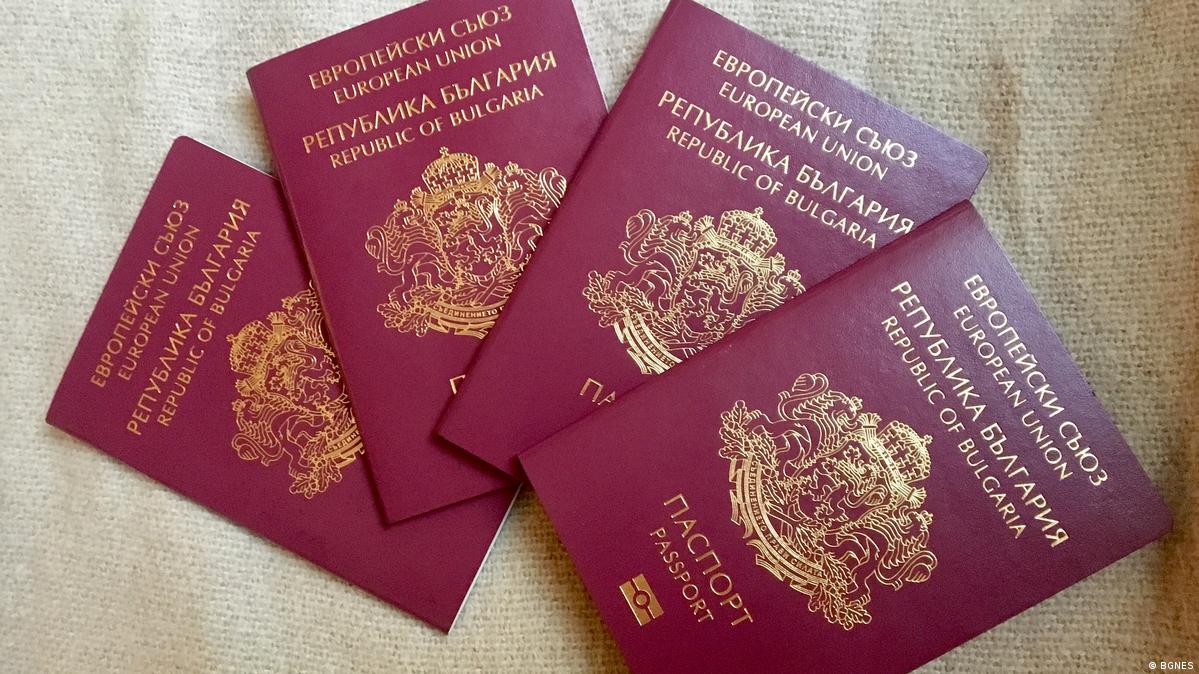
If you have Bulgarian Passport ancestry and are applying for citizenship and a passport, the interview is often the part people worry about most and also the part they are least prepared for.
This guide breaks down exactly what gets asked, what documents you need, how to prove your Bulgarian heritage, and what mistakes cause applications to fail. No filler. Just what you actually need to know.
Who Can Apply for a Bulgarian Passport Through Ancestry
Before the interview even comes up, you need to confirm you qualify. Bulgaria offers citizenship by descent to people who can prove that at least one parent or grandparent was a Bulgarian national.
The most common applicants from the Western Balkans region are:
- People with one or two Bulgarian-born grandparents
- Children of Bulgarian citizens living abroad
- Ethnic Bulgarians from North Macedonia, Serbia, and Bosnia
The application route typically goes through the State Agency for Bulgarian Passport Abroad (DABA) if you are applying from outside Bulgaria, or through the Bulgarian Ministry of Justice if you are already in the country.
You do not need to live in Bulgaria to obtain citizenship this way, but you do need to go through an official process that includes submitting documents and, in most cases, attending an interview.
The Difference Between Bulgarian Citizenship and a Bulgarian Passport
These are two separate things, and mixing them up causes confusion about the process.
Bulgarian citizenship is your legal status as a national of Bulgaria. You apply for this first, through a formal procedure.
A Bulgarian passport is the travel document issued once citizenship is confirmed. You cannot apply for the passport until citizenship is officially granted.
The interview most applicants refer to takes place during the citizenship application stage, not the passport issuance stage. Getting the physical passport after citizenship is approved is a simpler administrative step.
What Questions Are Asked at the Bulgarian Citizenship Interview
The interview is not a formal exam in most cases. It is a verification session officials want to confirm your identity, check that your documents are genuine, and assess whether your claimed connection to Bulgaria is credible.
That said, the questions follow predictable categories.
Personal Identity Questions
These are straightforward and designed to confirm you are who you say you are.
- What is your full name and date of birth?
- Where were you born?
- What is your current nationality?
- Where do you currently live?
- What is your occupation?
Ancestry and Family History Questions
This is where most applicants face the most pressure. Officials want to verify the Bulgarian connection is real.
- What is the name of your Bulgarian ancestor (parent or grandparent)?
- Where was your ancestor born?
- When did your ancestor live in Bulgaria or hold Bulgarian citizenship?
- Do you have any living relatives in Bulgaria?
- How did your family leave Bulgaria, and when?
You should know the answers to these questions from memory. If you hesitate or contradict your documents, it raises flags.
Knowledge of Bulgaria Questions
Not all offices ask these, but some do especially when the ancestry connection is being evaluated more carefully.
- Can you name the capital of Bulgaria?
- What is the official language of Bulgaria?
- Do you have any connection to Bulgarian culture, language, or community?
These are not trick questions. The bar is not high. But being completely unable to answer basic questions about a country you are claiming ancestral ties to can weaken your case.
Document Verification Questions
The official will go through your submitted documents and may ask you to explain or confirm specific items.
- Can you confirm the relationship between yourself and the person named in this birth certificate?
- Who obtained the apostille on this document?
- Has any of this information changed since submission?
Be familiar with every document in your file. Know what each one says and why it is there.
Do You Need to Speak Bulgarian to Get a Passport?
No Bulgarian language ability is not a formal requirement for citizenship by descent. You will not be failed for not speaking Bulgarian.
However, if you speak even basic Bulgarian, it can help create a more credible impression during the interview. If you do not speak the language at all, be prepared to explain your connection through family history and documentation rather than cultural familiarity.
Interviews for applicants from abroad are often conducted with an interpreter available, especially at consulates.
Documents You Must Have Ready Before the Interview
Missing or incorrect documents are the single biggest reason applications stall or fail. Prepare these well in advance some can take months to obtain.
Your personal documents:
- Valid passport or national ID
- Birth certificate (with apostille if required)
- Proof of current address
Ancestry proof documents:
- Birth certificate of your Bulgarian ancestor
- Marriage certificates showing name changes in the family line
- Death certificate of the ancestor (if applicable)
- Any Bulgarian identity documents your ancestor held (ID, passport, citizenship certificate)
Supporting documents:
- Completed application form
- Proof of no criminal record (from your country of residence)
- Photos meeting Bulgarian passport specifications
- Any previous correspondence with Bulgarian authorities
All foreign documents typically need to be translated into Bulgarian by a certified translator and may require an apostille stamp from the issuing country.
How to Prove Bulgarian Ancestry Accepted Evidence
The key challenge for most applicants is building a clear, documented chain from themselves back to a Bulgarian national.
What works:
- Original Bulgarian birth certificates of parents or grandparents
- Old Bulgarian national ID cards or internal passports
- Church records from Bulgarian parishes
- Military records
- Property records from Bulgaria
- Historical census records
What does not work on its own:
- Family stories or verbal accounts
- Photographs without supporting documents
- Unofficial genealogy websites
If original documents are lost or were never held, you may need to work with a Bulgarian archive service or a specialist lawyer to reconstruct the chain. This is common for applicants whose ancestors left Bulgaria decades ago.
How to Prepare for the Interview: Step-by-Step
Step 1 Know your family history cold Write out a clear timeline: who your Bulgarian ancestor was, where they were born, when they held Bulgarian citizenship, how the family line connects to you. Memorise the key dates and names.
Step 2 Review every document in your file Read each document before the interview. Know what it says, what it proves, and how it connects to your application. Officials may ask you to walk through specific items.
Step 3 Prepare for ancestry questions specifically These are where most people get caught off guard. Practice answering: where your ancestor was born, when they left Bulgaria, and what documentation you have proving the connection.
Step 4 Check your documents for consistency Names, dates, and places must be consistent across all documents. A date of birth that appears differently on two documents even by one digit can cause serious problems.
Step 5 Arrange certified translations in advance Do not leave translations until the last minute. Certified translators can take time, and some consulates require specific translation formats.
Step 6 Bring originals and copies Always bring both the original documents and photocopies. Officials may keep copies on file.
Common Reasons Bulgarian Passport Applications Get Rejected
Understanding why applications fail helps you avoid the same mistakes.
- Incomplete document chain gaps in the ancestry documentation that cannot be filled
- Inconsistent information names or dates that do not match across documents
- Uncertified translations translations done by non-approved translators
- Missing apostilles foreign documents submitted without the required apostille stamp
- Criminal record undisclosed or existing criminal convictions
- Credibility issues during interview inability to answer basic questions about your claimed ancestry
- Documents of questionable authenticity officials are trained to spot irregularities
If your application is rejected, you typically receive a written reason. Many rejections are fixable with additional documentation rather than being permanent disqualifications.
How Long Does the Process Take After the Interview?
Timelines vary significantly depending on the route, the volume of applications, and whether your documents are complete.
Typical ranges:
- Citizenship by descent through DABA: 12 to 24 months from submission to decision, sometimes longer
- Citizenship through the Ministry of Justice: Can be faster in some cases, particularly for direct children of Bulgarian citizens
- Passport issuance after citizenship approval: Typically 1 to 3 months once citizenship is confirmed
Delays most commonly happen when documents need to be verified against Bulgarian state archives, which is a manual process.
Bulgarian Passport Benefits: What You Gain
Once you hold a Bulgarian passport, you travel on an EU document. Bulgaria is a member of the European Union, which means:
- Visa-free or visa-on-arrival access to over 170 countries, including the US, UK, Canada, Japan, and Australia
- Right to live and work in any EU/EEA member state without a work permit
- EU consular protection if you are in a country without a Bulgarian embassy, you can use any EU member state’s consulate for assistance
- Path to other EU opportunities education, healthcare, and residency rights across the EU
For citizens of non-EU Western Balkan countries, a Bulgarian passport represents a significant practical upgrade in travel freedom and life options.
Pre-Interview Checklist
Use this before your interview date:
- All ancestry documents collected and verified
- All foreign documents apostilled
- All documents translated by a certified translator
- Originals and photocopies ready
- Family history timeline memorised (names, dates, places)
- Application form reviewed for accuracy
- Criminal record certificate obtained
- Interview appointment confirmed
- Interpreter arranged if needed
- Passport photos prepared to Bulgarian specifications
FAQ
Q: Do I need to speak Bulgarian to pass the citizenship interview? No. Language ability is not a formal requirement for citizenship by descent. However, basic familiarity with Bulgaria can help your credibility during the interview.
Q: What is the most common reason Bulgarian citizenship applications are rejected? Incomplete or inconsistent ancestry documentation. Gaps in the document chain such as a missing birth certificate for a grandparent are the most frequent problem.
Q: Can I apply for a Bulgarian passport without living in Bulgaria? Yes. Applications through the State Agency for Bulgarians Abroad (DABA) are specifically designed for applicants living outside Bulgaria.
Q: How far back can I claim Bulgarian ancestry? The standard route covers parents and grandparents. Claims based on great-grandparents are more complex and may require additional legal steps.
Q: Is the Bulgarian passport a full EU passport? Yes. Bulgaria is an EU member state. A Bulgarian passport gives you full EU travel document rights, including visa-free access to EU countries and the right to live and work across the EU/EEA.
Q: What happens if my documents are in a different language? All documents not in Bulgarian must be translated by a certified translator. Some consulates also require an apostille on the original document before translation.
Q: Can the interview be conducted in English or another language? This depends on the consulate or office handling your application. Many consulates serving applicants from the Western Balkans can accommodate Serbian, Bosnian, or Croatian. Always check in advance.
Q: How long does a Bulgarian passport last? A Bulgarian biometric passport is valid for 10 years for adults and 5 years for children under 14.
